Moroccans During Ramadan: A Journey Through Faith, Food & Tradition 🌙
Planning a trip Morocco during Ramadan? Discover the magical atmosphere, from the sighting of the crescent moon and the aroma of Harira, to the deeply spiritual Taraweeh prayers.
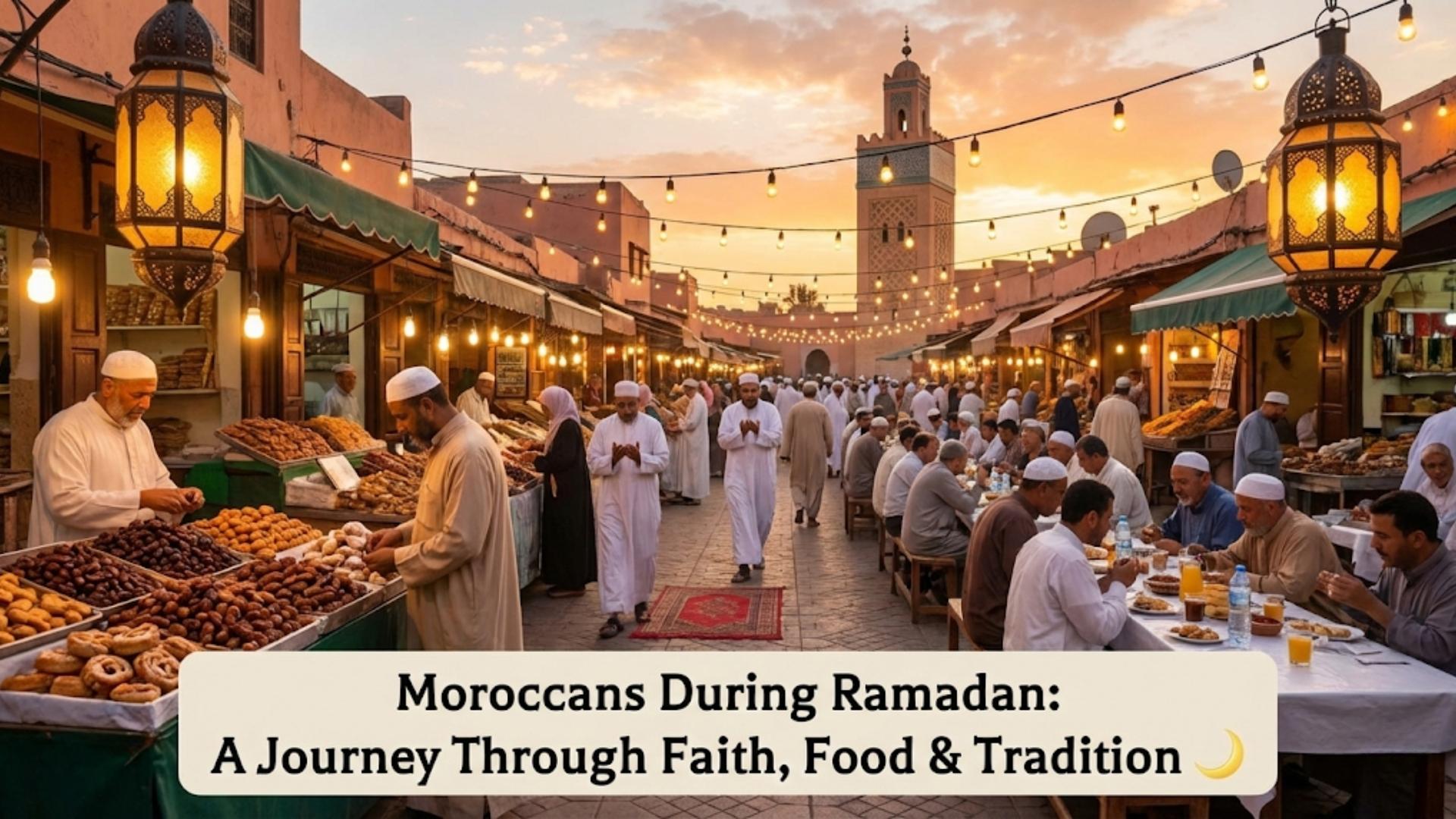
If you are planning a trip Morocco during the ninth month of the Islamic calendar, you are in for an extraordinary cultural and spiritual awakening. Ramadan in Morocco is not just a month of fasting; it is a profound transformation of daily life, where time slows down during the day and the streets come alive with unparalleled energy at night.
Forget the standard Morocco holidays you might have read about. Let me take you on a sensory journey through a typical Moroccan Ramadan—from the breathless wait for the crescent moon to the deeply moving Taraweeh prayers.
1. The Crescent Moon & The Eve of Ramadan 🔭
The magic begins before the first day of fasting. On the 29th of Chaâbane, the entire country holds its breath after sunset, waiting for the Ministry of Islamic Affairs to announce the sighting of the new crescent moon.
- The Announcement: When the moon is officially sighted, a wave of joy washes over the country. You will hear congratulatory messages ("Ramadan Mubarak!") echoing in the streets.
- The Nfar (The Horn Blower): In older Medinas, you might still hear the traditional Nfar (a man blowing a long copper horn) wandering the alleys, officially announcing the arrival of the holy month.
2. The First Day: Quiet Mornings & Frantic Afternoons ⏳
A typical day of fasting flips the normal Moroccan schedule upside down.
- The Morning Calm: The morning streets are peacefully quiet. Cafes are closed, and the usual hustle of the Medinas is replaced by a serene, slow pace.
- The Afternoon Rush: As the clock ticks closer to sunset, the energy shifts drastically. The streets become wonderfully chaotic. Bakeries display mountains of honey-soaked Chebakia, fresh Msemen, and Briouates. The air is thick with the rich, unmistakable aroma of Harira (the traditional Moroccan soup) simmering in every home.
3. Ftour Time: The Cannon and the Call to Prayer 🍲
As the sun dips below the horizon, an eerie, beautiful silence falls over the entire country. The streets are completely empty.
- The Breaking of the Fast: Suddenly, the boom of a traditional cannon echoes through the city, immediately followed by the soulful call to prayer (Adhan) from thousands of minarets. Families gather around beautifully decorated tables to break their fast with sweet dates, a glass of milk, and a comforting bowl of Harira. It is a moment of deep gratitude and family bonding.
4. Taraweeh & The Night Shift: A Spiritual Glow 🕌
After the Iftar meal, the real magic of a Moroccan Ramadan begins. The night comes alive in a way you will not see during standard Morocco holiday packages.
- The Walk to the Mosque: Men, women, and children dress in their finest, freshly ironed traditional Djellabas and Gandouras, holding prayer mats as they walk to the mosques for Taraweeh (the special nightly Ramadan prayers).
- The Atmosphere: The overflow of worshippers often spills into the streets. The mesmerizing sound of Quranic recitation fills the cool night air. It is a deeply moving experience, even for non-Muslim travelers.
- Midnight Life: After prayers, the cafes open their doors. Families and friends gather to sip mint tea, eat sweets, and chat late into the night until it is time for Suhoor (the final meal before dawn).
Plan your Morocco trip
Jump into destination hubs, stays, and tours linked to this guide.


Mohamed Chakkouh From ToMorocco Team
Your trusted guide to Morocco. We're passionate about sharing the beauty and culture of this amazing country.